
The wash sounds normal. The water drains. Then the drum starts to accelerate and the machine begins thumping against the cabinet, vibrating through the floor or creeping out of its space.
That symptom can come from something as ordinary as one wet bathmat sitting on one side of the drum. It can also be the first obvious sign of worn suspension, a loose basket, a damaged drum support or a bearing problem. The sound alone cannot tell you which one you have.
The quickest way to narrow it down is to watch what moves, when it moves and whether the behaviour changes when the original laundry is removed. A washer that struggles only with a duvet is not behaving like a washer whose inner drum wobbles while empty. Treat those as different faults from the start.
Quick answer
Stop the cycle if the machine is hitting the cabinet or walking far enough to pull on its hoses or power lead. Check the load first, then confirm that the cabinet is stable on all of its feet. On a newly installed or recently moved front-loader, confirm the transit bolts were removed. If severe shaking repeats with normal laundry, or the drum or basket behaves abnormally without the original load, move on to suspension and rotating-assembly checks rather than buying parts by guesswork.
Safety first
Unplug the washer before touching accessible mechanical parts. Do not bypass a lid switch or door lock, run the machine with protective covers removed, or try to hold a violently moving washer in place. Stop using it if the inner drum is visibly out of position, there is metal-on-metal scraping, a heavy internal component is loose, water is reaching electrical parts, or movement is stretching the fill hose, drain hose or mains lead.
In this guide 18 sections
Start by classifying the movement
Spend one cycle watching the washer before you reach for tools. The pattern usually tells you which branch deserves attention first.
| What you observe | Where to start |
| Only one duvet, bathmat, towel load or tiny load causes trouble | Load distribution, load size and cycle choice |
| It began immediately after installation or moving the washer | Transit bolts, packing, feet, pedestal and floor |
| The whole cabinet rocks when you push a top corner while it is off | Feet, locknuts or an unstable floor |
| The washer speeds up, slows down and repeatedly rearranges the load | The control is detecting imbalance; check loading and installation before parts |
| It spins acceptably empty but shakes badly with ordinary laundry | Load-dependent imbalance or weak suspension moves up the list |
| The basket or inner drum wobbles even with no laundry involved | Basket, hub, bearing, drum support or rotating assembly |
| The inner drum has obvious up-and-down play relative to the outer tub | Bearing or drum-support fault needs investigation |
| There is a deep rumble that rises with spin speed | Bearing or gearcase/rotating assembly deserves attention |
| The sound is a light knock from the back rather than a heavy tub impact | Check drain hose, fill hoses, power lead and anything touching the cabinet |
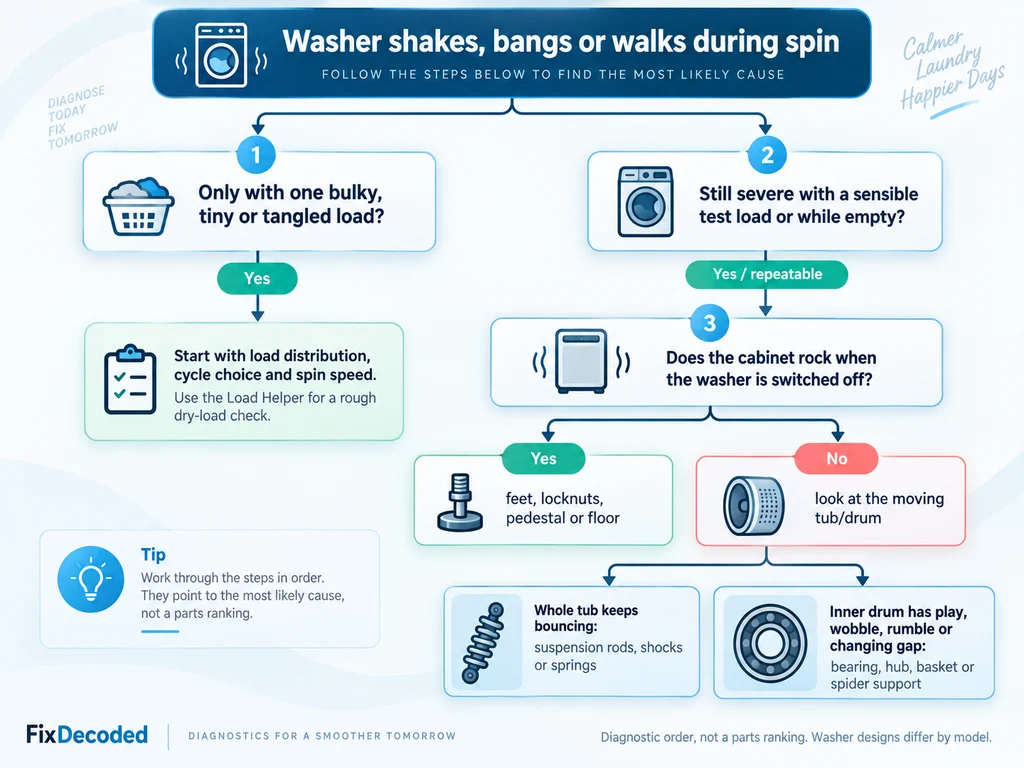
Figure 1. A symptom-first route for a washer that shakes, bangs or walks during spin.
Why a small imbalance becomes dramatic at high spin speed
A washer can look almost normal while tumbling and then become violent during the final spin. That is not surprising. The outward force created by the same off-centre mass rises with the square of rotational speed. Double the spin speed and, all else equal, the imbalance force becomes about four times as large.
That is why a slightly uneven load, loose basket or tired damper can be quiet at 300 or 400 rpm but obvious as the machine climbs towards its higher spin speeds. The graph below is not measured washer data. It simply shows the underlying relationship for the same off-centre mass and radius.
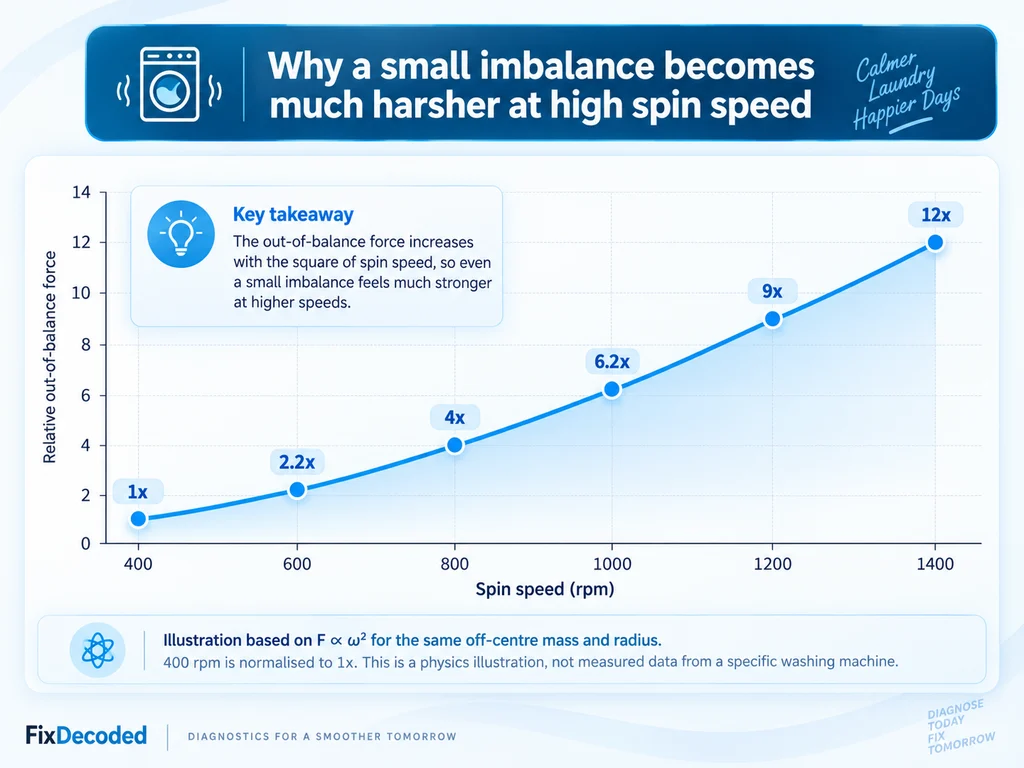
Figure 2. Relative out-of-balance force rises sharply with spin speed. This is a physics illustration, not machine-specific test data.
1. Retest the load before blaming the washer
A single bulky item can create more trouble than a genuinely full mixed load. Once a bathmat, duvet cover or heavy towel has absorbed water, it can collect on one side of the drum and become difficult for the washer to distribute evenly. The opposite extreme can also be awkward: a very small load may clump together with too little material around the rest of the drum to balance it.
Samsung’s current support guidance notes that both small loads and large water-absorbing items can gather to one side, and recommends redistributing the load or reducing spin speed where appropriate. Samsung support
Whirlpool similarly tells owners not to tightly pack the drum and cautions against washing a single bulky item on its own. Whirlpool Product Help
If the machine is normally calm but one blanket makes it bang, stop the cycle, let the door or lid unlock safely and correct that load before investigating the suspension. If every normal mixed load now behaves badly, the laundry is less convincing as the only explanation.
For a rough dry-load check, use the FixDecoded Washing Machine Load Helper. Keep in mind that a load can be within the kilogram limit and still be difficult to balance because of bulk, absorbency or one heavy item.
A useful clue: did one violent load change the washer permanently?
Owners often report that a washer handled normal loads until one severe off-balance event, after which it began banging on almost every spin. That sequence does not prove which part failed, but it changes the diagnostic order. Once the original awkward load is gone, repeatable movement points you back towards the machine itself: suspension, mounting points, basket or drum support, depending on the design.
2. Check the cabinet before the drum
Switch the washer off and try to rock it diagonally from one top corner towards the opposite rear corner. Repeat the test in the other direction. The cabinet should feel planted rather than teetering between feet.
A spirit level is useful, but it does not replace this stability test. A washer can look nearly level while one foot is barely carrying any weight. Whirlpool’s installation guidance specifically says the front and rear feet must make firm contact with the floor and tells owners to rock the cabinet front-to-back and side-to-side. Samsung gives similar advice and notes that keeping adjustable legs relatively short improves stability.
Whirlpool installation checklist | Samsung vibration guidance
Do not ignore floor flex
A rigid washer on a flexible floor can transmit much more movement through the room than the same machine on a solid slab. Whirlpool explicitly advises checking for floor flexing or sagging. LG also requires firm contact at all four levelling feet and uses a test load to confirm the result after adjustment.
This is where soft anti-vibration pads are often misunderstood. A non-slip pad may help a correctly level washer stay put on a slippery hard surface, and LG mentions non-skid pads for that situation. It does not fix a springy floor, loose pedestal, worn suspension or damaged drum support. If the floor visibly moves with the machine, treat the installation as part of the problem.
If the washer is on a pedestal or riser
Check the pedestal first. Its feet and mounting points must be stable before the washer above it can be stable. A loose pedestal can make the washer appear to have a suspension fault even though the movement begins underneath it.
3. A newly installed front-loader can shake violently for a very simple reason
Front-loading washers are transported with bolts or restraints that lock the suspended tub in place. They are meant to be removed during installation. If they stay fitted, the suspension cannot absorb movement normally, so vibration is transferred into the cabinet instead.
Whirlpool says a washer left with its shipping bolts in place will have excess vibration and noise. Samsung gives a practical clue: with the machine off, a correctly released front-loader drum should have some spring-like give when pushed. Samsung shipping-bolt check
Check the exact installation manual before removing anything from the back. The number and design of transit bolts varies by model. Keep them after removal because the tub should usually be secured again if the washer is transported later.
4. Make sure the bang is actually coming from the tub
A drain hose striking the rear panel can make a surprisingly convincing knock. So can a fill hose, a loose mains lead, a zip hitting the door glass or a small object trapped where it should not be.
AEG advises checking hoses, filters, the drum and small loose items before treating every spin noise as an internal failure. Its UK guidance specifically notes that a loosely fitted hose can vibrate against the appliance and produce a knocking sound. AEG support
External knocks usually sound lighter and more localised than the heavy impact of a tub reaching the cabinet, but acoustics can be deceptive. Inspect these items with the washer switched off, reposition them if necessary, then repeat the test.
5. Run one controlled test instead of repeating the bad load
Do not keep feeding the washer the same duvet that made it violent. Use the manufacturer-recommended test cycle or a sensible, evenly distributed test load. LG, for example, specifies a test load when confirming levelling on its front-loaders. Some manufacturers also provide calibration procedures after installation or suspension work.
An empty spin can still be informative, but it is not a universal pass/fail test. A washer that becomes calm when empty may still have suspension that only loses control under load. On the other hand, an inner drum or basket that visibly wobbles, rumbles or runs off-centre with no laundry involved gives you a reason to stop blaming load distribution.
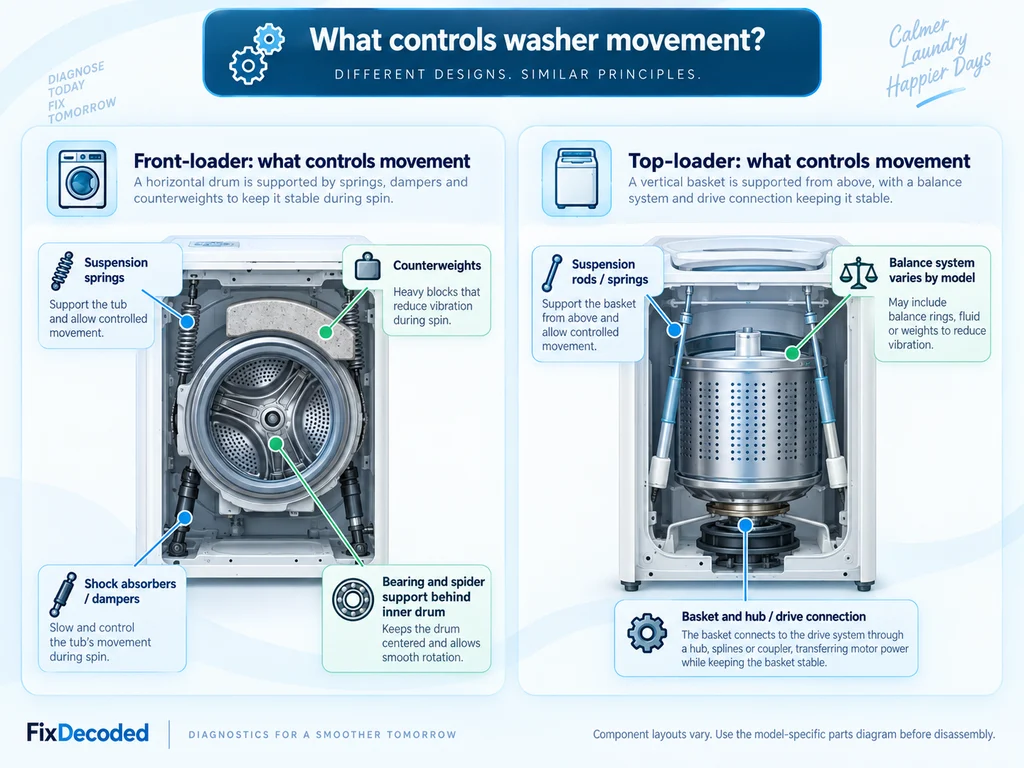
Figure 3. The parts that control movement differ substantially between front-loaders and top-loaders. Use the model-specific parts diagram before disassembly.
Top-loader: separate suspension movement from basket movement
Many modern top-loaders suspend the tub on long rod assemblies. Those rods support the tub and damp how freely it can move. As the damping wears, the tub can continue bouncing or swing far enough to strike the cabinet during spin.
iFixit uses a bounce test as a screening check: press down on the tub or basket and release it, then watch whether the movement settles promptly or keeps bouncing. Treat that as a clue, not a verdict. iFixit washing-machine shaking guide
If the washer is level, ordinary loads that used to work now make the tub swing widely, and the empty tub continues to bounce after you release it, worn suspension becomes more plausible. But a top-loader can also shake because the basket is loose on its hub, a bearing or gearcase is failing, a balance component is damaged, or a mounting point has worn.
I replaced the suspension rods and it still shakes
Do not replace another set just because search results keep mentioning rods. Repair discussions repeatedly show owners changing rods only to find that the violent spin remains. In those cases, useful next checks include whether the basket itself has play, whether it runs true while empty, whether there is a rumble from the drive or bearing assembly and whether the hub or basket connection is worn on models that use one.
One 2026 Maytag case remained violent after new suspension rods and a replacement hub assembly. Another Whirlpool discussion reported shot rods but little improvement after replacement, pushing the investigation towards gearcase bearings, hub and balance components. Community reports do not establish failure rates, but they are a good warning against treating one popular part as a universal cure.
Front-loader: shocks can fail, but check the inner drum before blaming them
A front-loader usually suspends the outer tub on springs and controls movement with shock absorbers or dampers. Weak, detached or leaking dampers can allow large tub movement as the drum accelerates and slows down.
The important distinction is whether the whole suspended tub is moving, or whether the inner drum is loose inside it. Those point to different repairs.
Check for inner-drum play
Unplug the washer, open the door and grip the inner stainless drum near its front edge. Lift gently, release it, then rotate the drum and repeat. You will feel some movement from the whole suspended tub. What you are looking for is a distinct clunk or looseness of the inner drum relative to the outer tub.
Also rotate the drum slowly and watch the gap around the door opening. A changing gap, visible sag, scraping or repeatable off-centre rotation deserves deeper inspection. Do not keep high-speed testing a drum that is visibly loose.
Rumble, grinding and bearing clues
Spin the empty drum slowly by hand with the washer unplugged. Motor magnets can create a light stepped feel on some designs, so do not diagnose a bearing from resistance alone. A rough growl, grinding, scraping or a noise that repeats at the same point on every revolution is more useful evidence, especially if it combines with drum play or a heavy roar during powered spin.
Bearing work on many front-loaders requires major tub disassembly. If the drum has obvious play or a loud mechanical rumble, that is a good point to compare the model-specific repair cost with the value and age of the washer rather than continuing to run it.
Spider or drum-support failure
Many front-loaders use a multi-arm support behind the inner drum, often called the spider. If it cracks or corrodes, the drum can rotate off-centre even though the motor still spins it. Slow tumbling may look almost normal, while high-speed spin exposes the problem.
A broken drum support is not something to diagnose from one noise. Combine the clues: changing drum gap, visible tilt, inner-drum play, scraping, abnormal empty rotation and the machine’s history. Recent repair-community examples show visibly off-centre drums later traced to damaged spider supports, which is why checking geometry is more useful than simply replacing shocks first.
Counterweights can create a heavy, frightening bang
Front-loaders commonly use heavy balance weights attached to the outer tub. If a mounting bolt loosens, a weight cracks or its mounting point fails, the resulting impact can sound much heavier than ordinary load imbalance.
A 2024 repair case involving a front-loader that shook only under load was eventually traced to a loose counterweight bolt and damaged mounting plastic. That is community evidence rather than manufacturer diagnosis, but it illustrates why a heavy internal knock after levelling and load checks deserves inspection rather than more load experiments.
What repeated rebalancing is telling you
Modern washers may slow down, tumble or agitate briefly, then try the spin again if they detect excessive imbalance. Samsung notes that imbalance can show up as slow spinning, stopping mid-cycle, repeated attempts, long cycle times or wet clothes at the end.
If that happens only with one awkward load, correct the load. If it happens with normal laundry on a stable machine, investigate why the washer cannot control the load. If the washer cannot drain properly, solve that first because many machines will not enter a proper high-speed spin with water still in the tub.
If water remains, move to Washing Machine Not Draining? Diagnose the Real Cause. If the washer drains but will not reach spin speed, use Washing Machine Not Spinning? Diagnose the Real Cause instead of treating every failed spin as a vibration problem.
If an error code appears, record it before resetting the machine
An imbalance, motor, drain or door-lock code tells you what the control detected, not automatically which component failed. Write the code down exactly, including letters, numbers and any leading zeroes, then match it to the correct brand and model family.
You can check documented meanings in the FixDecoded Error Code Decoder or start from the observed behaviour in the Fault Finder.
A practical diagnostic order
- Stop a violent spin before the washer pulls on its hoses or mains lead.
- Remove the original problem load and decide whether it was bulky, tiny, tangled or tightly packed.
- With the washer switched off, check whether the cabinet rocks on its feet.
- Inspect the floor, pedestal or riser for flex, looseness or a slippery contact surface.
- On a new or recently moved front-loader, confirm the model-specific transit bolts were removed.
- Eliminate external knocks from hoses, leads, zips and small trapped objects.
- Run the manufacturer-recommended test cycle or a sensible, evenly distributed test load.
- If the problem remains, separate whole-tub movement from inner-drum or basket movement.
- For a top-loader, assess suspension control, basket play and the hub or drive connection where applicable.
- For a front-loader, check shocks and springs, then look for drum play, rough rotation, counterweight movement or an off-centre drum.
- Stop before live electrical tests or major tub disassembly unless you have the correct service procedure and experience.
What not to do
- Keep running full-speed cycles while the tub is striking the cabinet.
- Replace suspension rods because they are the first part mentioned in search results.
- Replace front-loader shocks without checking whether the inner drum itself has play.
- Assume a brand-new washer cannot have an installation fault.
- Leave transit bolts fitted because the drum feels more secure that way.
- Use folded cardboard, soft foam or loose packing as a permanent levelling fix.
- Hold down, sit on or physically restrain a washer during a violent spin.
- Bypass a door lock, lid switch, earth or ground connection, or another safety interlock.
- Keep lowering the spin speed indefinitely to hide a mechanical fault that is getting worse.
When lowering the spin speed helps, and when it only hides the fault
Reducing spin speed lowers the forces created by a given imbalance, so one awkward load may become manageable at a lower setting. That can be a useful diagnostic clue.
It is not proof the washer is fixed. If every normal load still shakes and the only way to control it is to avoid high spin, you have reduced the condition that exposes the problem rather than repaired the cause. A washer with damaged suspension, a loose basket or a failing drum support should not stay in service simply because a lower-speed programme is quieter.
When the repair has moved beyond a simple DIY check
Levelling, correcting the load, securing an external hose and checking transit bolts are straightforward. A model-specific suspension replacement may also be reasonable for an experienced DIYer.
The job changes when you find obvious inner-drum play, a damaged spider or basket support, loose or broken counterweight mounting, failed tub bearings, a worn hub that requires substantial disassembly, or damaged suspension mounting points. These repairs involve heavy components, sharp cabinet edges and, on some models, extensive tub disassembly. At that stage, compare the model-specific repair cost with the washer’s age, condition and parts availability before ordering expensive assemblies.
Frequently asked questions
Why does my washing machine shake violently only on spin?
High-speed spin magnifies any out-of-balance force. Start with the load, feet, floor and installation. If it happens repeatedly with normal laundry or without the original load, suspension or rotating components move higher on the list.
Why does it bang only with towels or bedding?
Heavy absorbent items can collect on one side after soaking up water. Pause safely, redistribute the load and use the cycle recommended for bulky items. A washer that is quiet with ordinary loads is less suggestive of a permanent mechanical fault.
Can a washing machine be too empty?
Yes. A tiny load can clump to one side just as a single bulky item can. Samsung specifically notes that small loads may collect unevenly. Add suitable items or reduce spin speed if the manual permits it.
Why does my washer walk across the floor?
First make sure every foot is firmly on the floor and any locknuts are secure. Then check the floor or pedestal. A correctly installed washer that still walks with normal loads may have a suspension or mechanical problem.
Why is my new front-loader shaking so badly?
Check transit bolts and levelling before assuming a part has failed. Shipping restraints left fitted can cause severe vibration from the first use.
How can I tell whether top-loader suspension rods are worn?
A tub that continues bouncing instead of returning under control is a useful clue. Combine that with the washer being level, normal loads becoming increasingly unstable and no obvious basket or drive fault. The bounce test is not a substitute for model-specific inspection.
How do I know whether a front-loader bearing is bad?
A rough or roaring sound that rises with speed, especially when combined with inner-drum play or rough hand rotation, makes bearing trouble more plausible. Noise on its own is not enough because foreign objects and drum-support faults can sound similar.
Why does the washer still shake after I replaced the suspension rods?
Recheck the diagnosis. On a top-loader, basket or hub play, a bearing or gearcase problem and balance-system faults can mimic weak rods. Also verify the replacement rods are the correct model-specific set and were installed in the correct positions where the design requires that.
Can bad front-loader shocks make the tub bang?
Yes. Weak or detached dampers can allow excessive tub movement. Before calling the shocks the confirmed cause, check whether the inner drum is loose or off-centre and whether a counterweight or spring is damaged.
Should I use anti-vibration pads?
Only after the machine is correctly levelled and the floor issue is understood. Non-slip pads can help on a slippery hard surface where the manufacturer permits them. Soft pads cannot repair worn suspension, a flexible floor, a loose drum or a damaged bearing.
Is it safe to keep using a washer that bangs during spin?
Not if the tub or drum is hitting the cabinet, the washer is travelling across the floor, the inner drum has obvious play, there is grinding or scraping, or the movement is stressing hoses and cables. Stop and diagnose it before the original fault damages something else.
The ten-minute isolation check
Before buying a part, remove the original laundry from the diagnosis and answer three questions: Does the cabinet rock while the washer is off? Does the whole suspended tub keep bouncing, or is the inner drum or basket itself loose? Does the symptom remain with a sensible test load or without the original awkward load?
Those observations separate most of the cheap causes from the faults that justify opening the machine. They also prevent the most common expensive mistake: replacing a popular part because another washer on the internet made a similar noise.
For a broader symptom route, start with Washing Machine Troubleshooting: Diagnose Common Problems by Symptom.
Sources
- Samsung – Washing machine spins poorly
- Samsung – Washing machine is shaking too much
- Whirlpool – Washer walking and/or vibrating, front-load washer
- Whirlpool – Front-load washer installation checklist
- LG – How to level an LG front-load washing machine
- AEG UK – Washing machine emits noises and shakes while spinning
- iFixit – Washing Machine Shaking troubleshooting
- Reddit r/appliancerepair – Maytag shaking violently after rods were replaced, July 2026
- Reddit r/appliancerepair – Top-loader still shaking after suspension rods, September 2023
- Reddit r/appliancerepair – Broken spider arm discussion, April 2026
- Reddit r/Appliances – Front-loader counterweight bolt fault, November 2024