
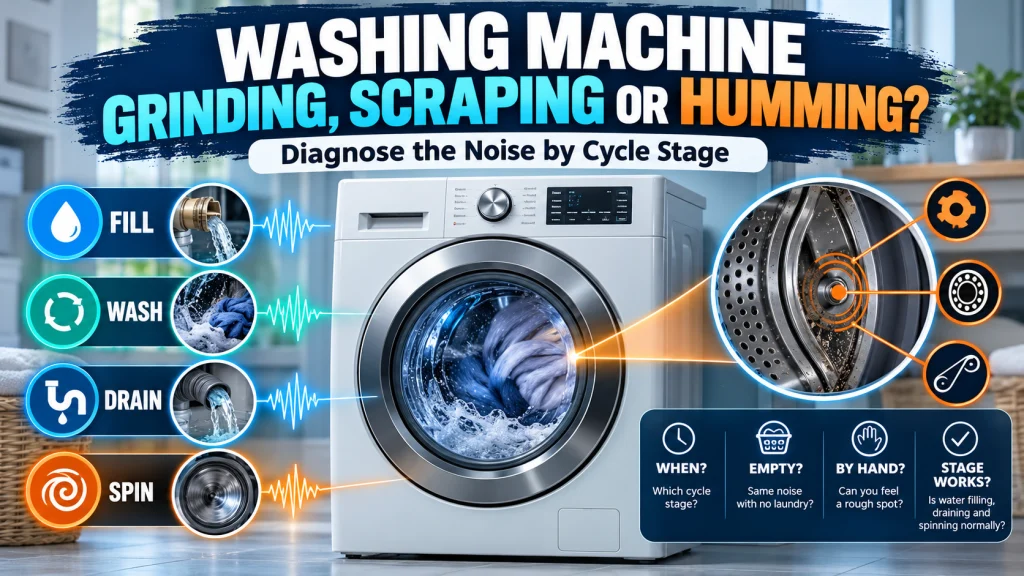
A washing machine can make a noise that sounds expensive and still be working exactly as its manufacturer intended. The awkward part is that the opposite is also true: a light scrape that appears once per drum revolution can be more useful diagnostically than a dramatic hum that is simply the drain pump doing its job.
That is why “what does the noise sound like?” is only half the question. The better questions are when it happens, whether the machine completes that part of the programme, whether the sound remains with the laundry removed, and whether you can reproduce anything unusual with the washer unplugged and the drum turned slowly by hand.
This guide is deliberately focused on grinding, scraping, humming, buzzing, squealing, rattling and rumbling. If the whole cabinet is thumping, walking or banging during spin, that is a different symptom and should be diagnosed as a balance, installation or suspension problem first.
Quick answer: Do not order a bearing, belt, pump or motor from the sound name alone. Note the exact cycle stage, remove the laundry, and listen again. A hum during drain with strong water flow can be normal. A hum during drain with little or no water flow points back to the drain path. A scrape that repeats at the same drum position deserves a foreign-object or drum-contact check. A deep rumble that grows with spin speed becomes more concerning when the empty drum also feels rough or has abnormal play.
Safety first: Stop the washer if the drum is visibly out of position, scraping hard, leaking near electrical parts, smelling burnt, repeatedly tripping a breaker/GFCI/RCD, or if the sound is rapidly worsening. Unplug the machine before putting a hand inside the drum, checking an owner-accessible filter, or rotating the drum by hand. Do not remove panels for a powered listening test and do not bypass a door or lid interlock.
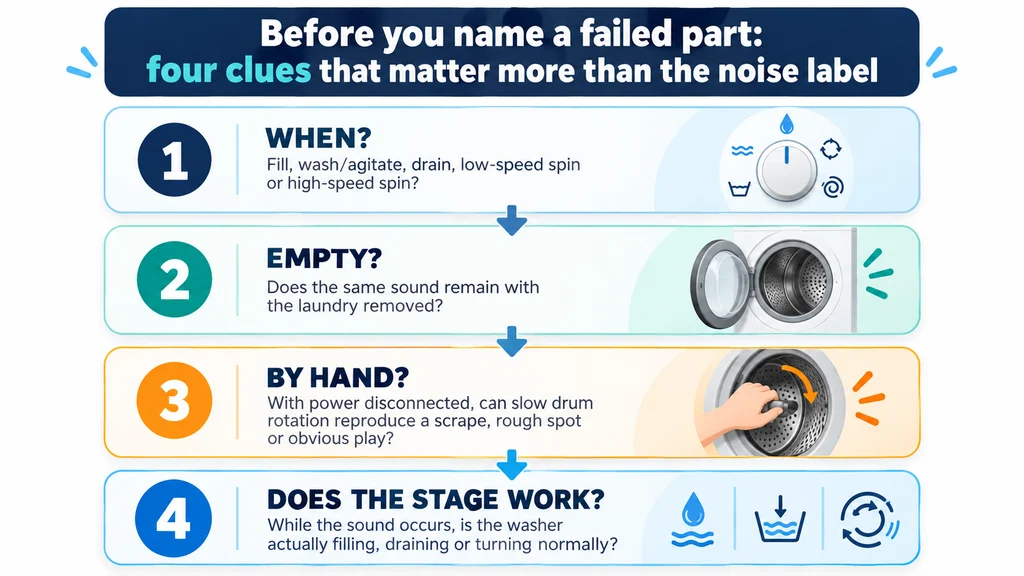
Figure 1. Four observations that usually narrow a washer noise faster than guessing from the word “grinding”.
In this guide 17 sections
First decide whether the noise is actually abnormal
Modern washers are not acoustically simple machines. Pumps, water valves, lid locks, clutches, gear-driven agitation systems and variable-speed motors all make noises that an older belt-driven washer may never have made. Some manufacturers publish sound libraries for exactly this reason.
GE documents an electric pulsing, humming or grinding-like sound during agitation as normal on several top-load models. It also describes an electric hum with water flow during drain and a slurping or gurgling sound as the last water and air leave the pump. Whirlpool similarly notes that some grinding or rubbing sounds during wash or spin can be normal drive-system noise, especially on newer designs. Samsung distinguishes quiet humming during drain and a click followed by short thumping during a clutch transition from noises that need investigation.
The useful rule is not “grinding is normal” or “grinding is bad”. The rule is model plus stage plus behaviour. If a sound is new, much louder than before, accompanied by poor performance, or reproducible as physical contact with the washer switched off, treat it as evidence rather than background noise.
A quick noise-and-stage reference
| What you hear | When it happens | Check first | Why it matters |
| Steady hum with water flowing | Drain | Watch the drain flow and whether water leaves normally | A running pump normally hums; weak/no flow changes the diagnosis. |
| Hum/buzz but no water enters | Fill | Confirm taps, hose flow and inlet screens | The inlet valve may be energised but starved or restricted. |
| Rhythmic scrape once per revolution | Wash or slow hand rotation | Empty drum; inspect rim/holes and note the exact repeat point | Repeated contact suggests debris or a rotating part touching something. |
| Grinding/pulsing only during agitation | Wash/agitate | Check model guidance, load size and level | Some drive systems make this sound normally. |
| Deep rumble or roar that rises with spin speed | Spin | Empty hand rotation, drum geometry and play | Support/bearing faults become more plausible when other mechanical clues agree. |
| Squeal/whistle only while filling | Fill | Water pressure, inlet screens, supply hose | GE and LG both document fill-side squeal/whistle causes. |
| Rattle/click that changes with clothing | Wash/spin | Empty pockets; zips/buttons; drum and accessible filter | Coins, wires and clothing hardware can mimic component failure. |
| Grinding/rattle only while draining | Drain | Owner-accessible filter and drain path, if the manual provides one | Foreign objects can strike a pump impeller; poor drainage strengthens this path. |
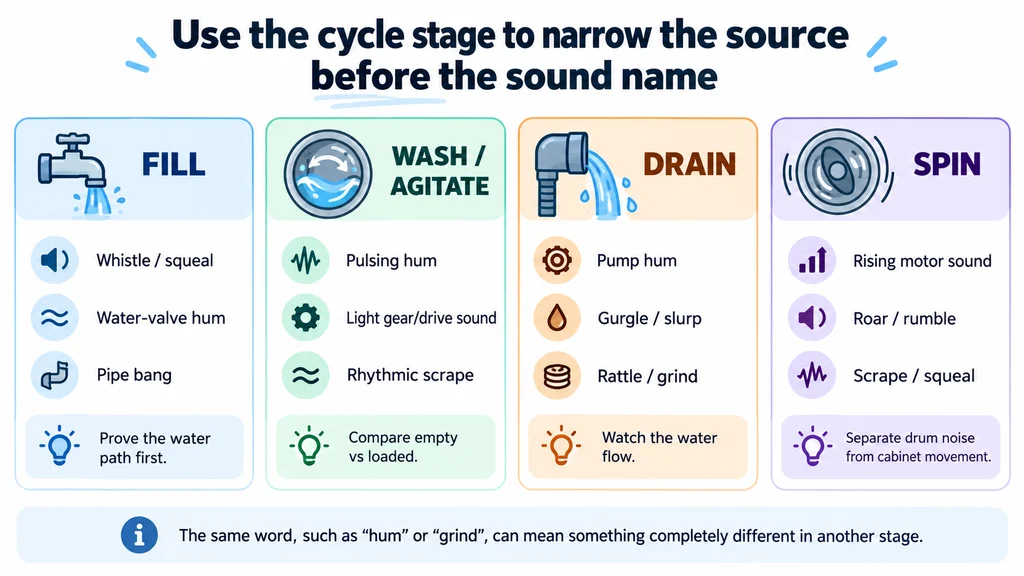
Figure 2. The cycle stage often tells you more than the adjective used to describe the sound.
The one-minute noise test before you run another full load
You do not need to dismantle the washer to collect useful evidence. In fact, opening panels too early often makes the diagnosis worse because it encourages part-by-part guessing. Start with four low-risk observations.
- Mark the stage. Write down whether the sound begins during fill, low-speed washing/agitation, draining, load balancing, low-speed spin or high-speed spin. If it only appears during one transition, note that too.
- Repeat with the drum empty. If the manufacturer permits a short rinse, drain/spin or diagnostic cycle, remove the laundry and see whether the sound remains. A zipper, buckle or badly balanced load disappears from the evidence once the drum is empty.
- Turn the unplugged drum slowly by hand. Do not fling it. Rotate slowly in both directions and listen for a rough spot, one-per-revolution scrape or obvious contact. On some models, normal mechanisms can click or feel different from an old free-spinning drum, so compare the pattern rather than demanding complete silence.
- Check whether the stage actually works. A drain-pump hum while water shoots out strongly is not the same fault as a hum while the tub stays full. A fill-side buzz with normal flow is not the same as a buzz with a dry drum. Performance is part of the sound diagnosis.
If the washer hums, buzzes or grinds while draining
Start by watching the water, not the pump. LG, Samsung, GE, Whirlpool, AEG and Zanussi all document pump humming, gurgling or slurping as a normal part of draining on at least some models. The sound usually changes near the end as air mixes with the last water leaving the tub.
The red flag is when the sound and the result do not match. A steady hum with weak flow, water left in the drum, repeated drain errors or a rattling/grinding pump sound points back to a restriction, foreign object, impeller problem or a pump that is no longer moving water effectively.
If the tub stays full or drains only as a trickle, stop treating the sound as the primary fault and follow Washing Machine Not Draining? Diagnose the Real Cause. That guide separates a blocked filter or hose from household-drain, backflow and pump problems.
On front-loaders with an owner-accessible pump filter, follow the exact manual procedure because residual water can spill quickly and may still be hot. Do not assume every washer has a user-serviceable filter, and do not force an impeller with a tool just because it looks difficult to turn.
If the grinding or pulsing happens only during wash or agitation
This is the stage where generic advice causes the most false alarms. GE specifically describes electric pulsing, humming or grinding-like agitation sounds as normal on some top-loaders, while Whirlpool says newer drive systems may produce motor and gear sounds during wash or spin. A new machine can therefore sound more mechanical than the washer it replaced without anything being broken.
Use three checks before treating the drive system as faulty: confirm the machine is level, reduce an overloaded or tightly packed load, and compare the noise with an empty or modest test load that the manual allows. Samsung also notes that certain squealing, squeaking or grinding complaints can be load-related and recommends testing with a controlled load before service.
If a new harsh grinding sound remains with the drum empty, the washer hesitates or fails to move normally, or the noise is clearly coming from underneath rather than from laundry contact, internal drive components move up the list. The exact parts vary by design. A top loader may use a gearcase, clutch, shifter, hub, belt or coupling; another model may use a direct-drive motor and none of those same parts. Identify the full model before ordering anything.
If you hear a scrape at the same point on every revolution
A repeatable once-per-revolution scrape is more informative than a vague “loud washer” complaint because it suggests something tied to rotation. Remove the laundry and turn the unplugged drum slowly. If the scrape happens at nearly the same position each time, inspect the visible drum holes, the door-seal area on a front loader, and the space you can safely see without removing panels.
Foreign objects are common enough that LG has specific guidance for wires, hairpins, coins and other items caught in the tub or drain holes. A bra wire can protrude through a perforation and scrape the outer tub while the inner drum turns. Zips, buttons and other hard clothing hardware can also create a convincing metallic rattle.
Repair-community cases show why this check matters but also why it is not conclusive. One user found a visible rod scraping the drum that others identified as a likely bra underwire. In another 2026 case, a top-loader developed a scrape that was initially difficult to reproduce by hand and was ultimately traced to a bearing problem. Treat community examples as patterns, not proof for your machine.
If you can see or safely reach a loose object at the drum opening, remove it only if that can be done without forcing it deeper or damaging the drum. If the object has dropped between the inner and outer tub, or access requires heater removal, tub separation or major disassembly, that is no longer a simple owner check.
If a rumble or roar grows as spin speed rises
High-speed spin amplifies almost every rotating fault, which is why bearings get blamed so quickly. The sound is more useful when it arrives with other mechanical evidence: rough empty rotation, obvious up-and-down or side-to-side inner-drum play, a changing drum-to-seal gap, scraping that is present with no laundry, or a history of the noise getting progressively worse.
Do not diagnose a bearing from “it is loud on spin” alone. A badly balanced load, unlevel machine, loose hose hitting the cabinet, shipping hardware left in place, pump noise immediately before spin, or a failing drum support can all be described by an owner as roaring, grinding or banging.
If the entire cabinet is moving, thumping or walking, use Washing Machine Shaking or Banging During Spin? Diagnose the Real Cause first. That page owns the balance, levelling, flooring, transit-bolt and suspension path so this noise guide does not duplicate it.
A front-loader with obvious drum play, visible tilt or heavy mechanical rumble deserves service-level diagnosis. Bearing or rear drum-support work can require substantial tub disassembly. Keep the diagnosis model-specific rather than treating every front loader as the same machine.
If the squeal or whistle happens only while water is filling
Do not start with the belt. The drive system may not even be moving yet.
GE documents squealing or whistling during fill as a possible water-pressure issue and recommends checking the inlet-valve screens if adjusting the supply does not change the sound. LG likewise says fill-side squeaking can be associated with water pressure or debris in the water-supply filter. LG also documents the ordinary hum and click of the inlet valve opening and closing on some top-load models.
If the sound comes with weak flow, a dry drum or a fill error, continue with Washing Machine Not Filling With Water? Diagnose the Cause Before Replacing Parts. A fill problem needs supply, hose and inlet-screen checks before any valve diagnosis.
A sharp bang from the wall or pipework as the valve shuts can also be household water hammer rather than a fault inside the washer. If the sound is clearly in the plumbing and coincides with valve closure, a plumber may be more useful than an appliance technician.
If it rattles, clicks or clacks
First remove the simplest noise sources. Empty every pocket, close zips, fasten metal hooks, and make sure the drain and fill hoses are not tapping the cabinet or a nearby wall. LG specifically notes that hoses and nearby shelving can turn normal vibration into a repeated tapping sound.
Some clicking is also normal. GE documents lid-lock clicks at the beginning of a cycle and a metal clank/click during certain agitation-to-spin transitions. Samsung similarly describes a brief click followed by thumping as a normal clutch transition on some washers. The pattern matters: a short repeatable transition sound is different from continuous metallic clatter through the whole programme.
If rattling appears only during drain, move back to the pump/filter path. If it appears only with laundry in the drum, compare an empty test. If it remains with an empty drum and follows rotation, treat it more like a contact or drive-system noise.
If the noise appears only with a heavy or bulky load
Load-dependent noise deserves a load test before parts. Whirlpool says overloading can make normal grinding-type drive sounds louder. Samsung and LG both direct users towards load size, balance and installation when unusual noises show up during wash or spin.
If you are unsure whether the drum is simply packed too tightly, use the FixDecoded Washing Machine Load Helper. Weight is only part of the check: one wet bathmat, duvet or waterproof item can be hard to balance even when the dry kilogram figure looks reasonable.
What matters diagnostically is whether a normal mixed load behaves differently from a single bulky item. If the machine is quiet empty, quiet with ordinary laundry and noisy only with one awkward load, correct the load before investigating bearings or suspension. If every sensible load now produces the same new mechanical sound, the laundry becomes a weaker explanation.
Front-loader and top-loader differences that matter
Noise articles often become misleading when they mix every washer design together. A front loader and a top loader can make the same sound for different reasons, and even two top loaders from different generations can use completely different drive systems.
| Clue | Front loader | Top loader |
| Hand rotation | Useful for repeatable scrape/roughness and obvious drum play, but do not expect every design to feel identical. | Basket/washplate mechanisms and drive engagement vary; model guidance matters. |
| Owner-accessible drain filter | Common on many models, but not universal. | Often absent or accessed differently; do not invent a filter location. |
| Drive noise | Belt or direct drive depending on model. | Can use belt, gearcase, clutch, shifter, hub or direct drive depending on model. |
| High-speed mechanical noise | Bearing/drum support is one service-level path when combined with play, roughness or geometry changes. | Bearing, hub, gearcase or drive support can create similar descriptions depending on design. |
If the noise started after moving, installation or maintenance
Timing matters. A washer that became noisy immediately after a move deserves a different first pass from one that slowly developed a rumble over several months.
- Confirm all shipping or transit hardware was removed exactly as the installation manual requires.
- Check that every adjustable foot is firmly on the floor and that locking nuts are secure where fitted.
- Make sure a drain pan is not touching the bottom of the machine. Whirlpool specifically notes that tub contact with some drain pans can create rubbing or grinding complaints.
- Reposition fill and drain hoses so they cannot tap the cabinet during vibration.
- If the pump filter was recently cleaned, check that it is fully reseated and not leaking before another test.
- If plumbing work preceded a new fill-side whistle or squeal, inspect the inlet screens for stirred-up debris.
A technician-style decision path
| Step | Question | What the answer changes |
| 1 | What exact stage creates the noise? | Moves the diagnosis towards inlet, drive, drain or high-speed rotating components. |
| 2 | Does the washer complete that stage normally? | A sound with normal performance is interpreted differently from the same sound with a failed fill, drain or spin. |
| 3 | Does it remain with the drum empty? | Removes zips, coins, load imbalance and bulky laundry from the evidence. |
| 4 | Can slow unplugged hand rotation reproduce contact or roughness? | Raises rotating mechanical/contact causes without live testing. |
| 5 | Is there visible drum play, tilt, leak, hot smell or rapid worsening? | Moves the job out of routine owner troubleshooting and towards service. |
| 6 | What changed immediately before the noise began? | Installation, a move, filter cleaning, a single violent load or plumbing work can reorder the likely causes. |
When to stop testing and arrange a repair
Book manufacturer or qualified appliance service when the washer is mechanically rough with no laundry, the inner drum has obvious play or sits visibly off-centre, a severe scrape continues through slow hand rotation, the machine cannot fill/drain/spin normally after external checks, or the sound is accompanied by leaking, burning smell or electrical protection tripping.
Also stop if the next step requires removing the tub, motor, gearcase, heater, drum support or control electronics, or needs powered measurements inside the cabinet. A useful service report describes the sequence rather than naming a part: “The washer fills and washes normally, then makes a rough scrape once per drum revolution even when empty; I can reproduce it slowly by hand and there is slight drum play.” That is much more useful than “I think the bearing is bad.”
What not to do
- Do not keep running a washer with hard mechanical scraping just to see whether it gets worse.
- Do not spray lubricant into the drum, bearing area, belt path or pump because a forum post called the noise “dry”.
- Do not order a belt until you have confirmed the model actually uses one.
- Do not call every spin noise a bearing fault. Check balance, installation, pump timing and drum evidence first.
- Do not force a pump impeller or remove a filter that the owner manual does not identify as user-accessible.
- Do not defeat a door/lid lock or run the machine with panels removed so you can get closer to the sound.
If your machine has more than one symptom and the noise is only part of the story, return to Washing Machine Troubleshooting: Diagnose Common Problems by Symptom and start from the stage that actually failed.
Frequently asked questions
Is a grinding noise from a washing machine always a bad bearing?
No. Manufacturer guidance documents normal grinding-like or pulsing drive sounds on some machines, and foreign objects, drain-pump debris, overloading, installation contact and other drive components can also be described as grinding. Bearing/support trouble becomes more convincing when the noise grows with speed and is backed by rough empty rotation, abnormal play or visible drum geometry changes.
Why does my washer hum during spin?
The sound may actually be the drain pump running immediately before or during the spin sequence. If water is leaving strongly and the cycle continues normally, a steady pump hum can be normal. If the tub stays full or flow is weak, diagnose the drain path.
Why does my washing machine scrape when I turn the drum by hand?
A repeatable hand-spin scrape can come from a foreign object, seal/contact point or a deeper drum-support/bearing problem. Check the visible drum holes and seal area first. Stop if the drum is visibly off-centre, has obvious play or the scrape is severe.
Can a bra wire or coin really cause a scraping or grinding sound?
Yes. LG specifically warns that wires, hairpins, coins and similar objects can become caught in the tub or filter. A wire protruding through a drum perforation can scrape as the drum rotates.
Why does the washer squeal only when filling with water?
That points away from the spin drive. GE and LG both document fill-side squeal/whistle complaints related to water pressure or inlet-screen restriction. Check the supply and screens using the model manual before treating the belt or bearings as suspects.
Can I keep using a noisy washing machine?
A brief model-documented hum, click or pulsing sound with normal operation is different from new hard scraping, obvious drum play, a growing roar, leaking, a hot/burning smell or electrical tripping. Stop and investigate the latter rather than continuing full loads.
Sources used for fact-checking
- Samsung US – Washing machine is too noisy
- Whirlpool Product Help – Grinding or Rubbing Noise (Top Load)
- Whirlpool Product Help – Grinding or Rubbing Noise (Front Load)
- GE Appliances – Top Load Washer Normal Sounds
- GE Appliances – Washer Noise Heard When Filling with Water
- LG USA – Troubleshooting Noises During the Cycle
- LG USA – Humming noise during spinning/draining
- LG USA – Squeaking noise during water supply
- LG USA – Foreign object / squeaking in tub holes
- AEG UK – Unusual noises during draining or spinning
- Zanussi UK – Unusual noises during draining or spinning
- Reddit r/appliancerepair – LG top-loader scraping case (2026)
- Reddit r/appliancerepair – metal rod / bra-wire scraping case